
Stress Management for Nurses
According to a survey conducted by the Royal College of Nursing (RCN) in 2019, 61% of Nurses reported experiencing work-related stress, which can contribute to burnout and mental health concerns. Additionally, in a 2020 survey by the Nursing and Midwifery Council (NMC), 28% of Nurses reported experiencing a mental health condition in the previous year.
These statistics are supported by research from the Health and Safety Executive (HSE), which found the healthcare sector has the highest rate of work-related stress and anxiety in the UK compared to any other sector, with Nurses being particularly vulnerable.
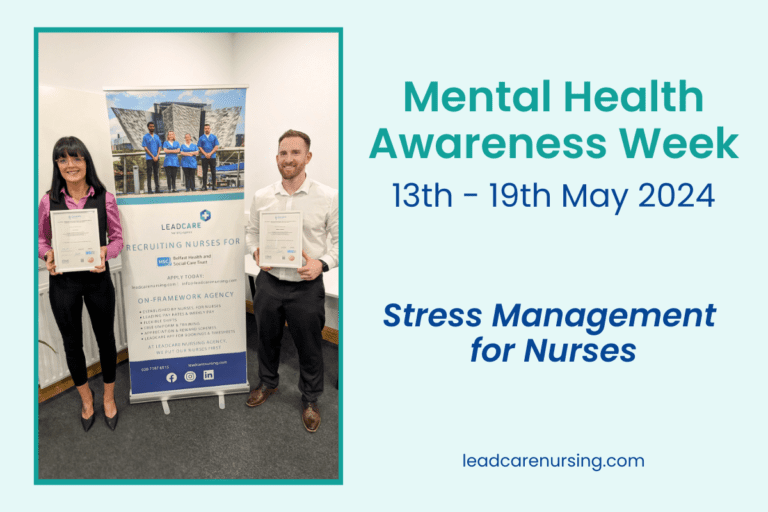
As a Nursing Agency established by Nurses, for Nurses, we understand the challenges and pressures of working on the frontline of healthcare services. To ensure we can provide support to our Agency Nurses, two members of our Senior Leadership Team recently undertook a two-day training course and were awarded Level 3 accreditation in First Aid for Mental Health.
Leadcare Recruitment’s Registered Nurse Manager, Karen Kane, who is an advocate for compassionate leadership, said:
‘Nursing is a profession that embodies caring for others. Irrespective of personal lives outside of work, Nurses are expected to be in optimum condition to fulfil their roles and responsibilities. At Leadcare, we take a holistic approach and consider the personal issues, stressors, and other challenges our Nurses may have to face before putting on their uniform to care for others.’
‘Our focus is to ensure we promote psychological safety within our workforce and allow staff to practice effectively whilst feeling supported and listened to. We have an ‘open door’ policy that enables our staff to access a member of the Senior Management Team in a safe, confidential space should they feel they require support, and we run monthly one-to-one ‘Let’s Talk’ sessions, where our Agency Nurses can book a meeting with a member of our Senior Management Team for a cup of tea and a chat in confidence.’
First Aid for Mental Health Training
Leadcare Recruitment Director and Registered Nurse, Stephen Ferguson, used the First Aid for Mental Health training as an opportunity to explore ways we can support staff who may be dealing with mental health issues. He said:
‘Having a better understanding of a range of mental health issues allows us to positively adopt support mechanisms into our policies in the workplace. The awareness I now have from undertaking this course has given me a much better understanding and mindfulness of ensuring we, as a company, consider the physical and mental health and well-being of our staff, including any adjustments they may need to make sure they can work safely and effectively, whilst feeling supported.’
Here are some of the proactive activities Leadcare staff enjoy to help relieve stress, support selfcare, and promote positive mental health:
- Limit Social Media Exposure
Constant exposure to digital devices, and particularly social media, has been shown to exacerbate stress and anxiety with research from the Mental Health Foundation highlighting the detrimental effects of social media on mental wellbeing and excessive use being linked to increased feelings of loneliness.
Take regular breaks from scrolling and instead engage in non-digital activities that promote rest and relaxation. Most mobile devices have screentime monitoring, so you can become more aware of how much time you’re spending online and take steps to reduce it.
- Get Outdoors
As summer approaches with warmer temperatures and lighter evenings, it’s a great time to get outside. Spending time outdoors has proven benefits for mental health, with a survey by Natural England finding 71% of adults report feeling happier after spending time outdoors in nature.
- Financial Wellness
Often, financial concerns contribute significantly to stress levels. Being proactive in relation to your finances can help, whether that’s by being aware of your financial health and creating a budget to better understand your income and expenditure, or ensuring when renewals are due for things like phone contracts, broadband, and insurance, you’re pricing around to get the best deal possible.
The Money Saving Expert website by Martin Lewis is a fantastic resource for all things financial management.
- Get Moving
The numerous benefits of movement and exercise on physical and mental health and wellbeing are widely known. According to Sport England, 68% of adults agreed physical activity helps them manage stress, with 66% reporting feeling less anxious after exercising. All movement counts, whether you prefer going for a walk, taking a class at your local gym, or putting on your favourite music and dancing.
- Read A Book
Research by the British Association for Counselling and Psychotherapy (BACP) found 43% of people in the UK read a book to help ease their stress levels during Covid-19. This is supported by research conducted in 2009 that found 30 minutes of reading lowered blood pressure, heart rate, and feelings of psychological distress as effectively as yoga and laughing.
- Get Creative
The Office for National Statistics (ONS) reports engaging in creative activities, such as crafting, painting, or journaling is associated with higher levels of happiness and lower levels of anxiety and depression among adults in the UK.
Whilst selfcare and activities such as the examples outlined above are important and may contribute to developing and maintaining positive mental health, they are not a replacement for seeking professional help if you are experiencing symptoms of anxiety, depression, or another mental health issue. We encourage anyone experiencing poor mental health to contact their GP for assessment and potential treatment options.
Other sources of support are also available, such as: